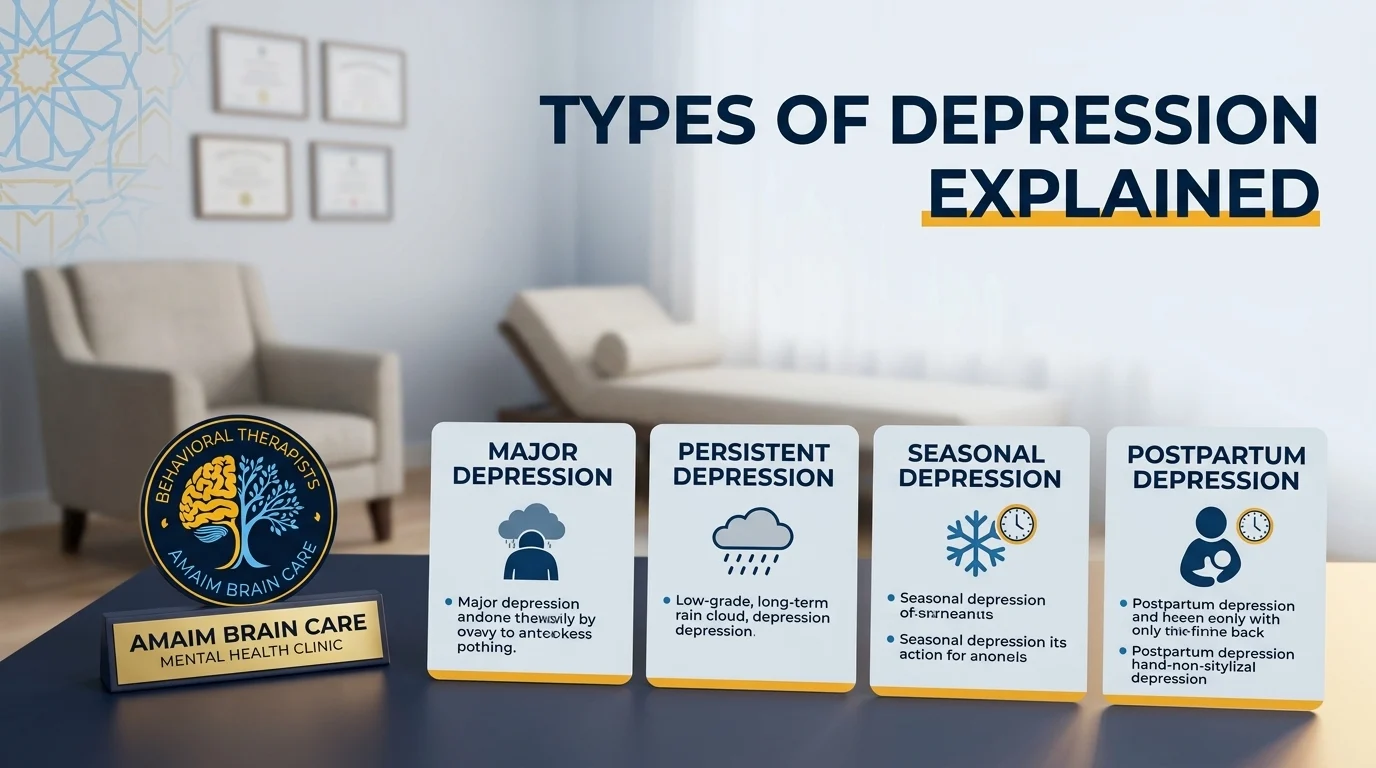
Depression does not look the same for everyone. Different people experience different patterns of symptoms, duration, and triggers. Doctors classify depression into several types so that treatment can be more accurate and effective.
Understanding these types can help you recognize symptoms earlier and seek the right psychiatric treatment.
ڈپریشن ہر شخص میں ایک جیسا ظاہر نہیں ہوتا۔ مختلف لوگوں میں اس کی علامات، شدت اور مدت مختلف ہو سکتی ہے۔
اسی لیے ڈاکٹر ڈپریشن کو مختلف اقسام میں تقسیم کرتے ہیں تاکہ درست تشخیص اور مؤثر علاج کیا جا سکے۔
ان اقسام کو سمجھنے سے مریض اور خاندان کو علامات کو جلد پہچاننے اور مناسب علاج حاصل کرنے میں مدد مل سکتی ہے۔
1. Major Depressive Disorder
Major Depressive Disorder is the most common and well known form of depression. In this condition, a person experiences intense sadness, loss of interest, and emotional emptiness that affects daily life.
People with this condition often struggle to perform normal activities such as working, studying, socializing, or even taking care of themselves. Sleep problems, low energy, loss of motivation, and negative thoughts are very common.
Symptoms usually last at least two weeks or longer, and without treatment they may continue for months.
یہ ڈپریشن کی سب سے عام اور زیادہ پہچانی جانے والی قسم ہے۔ اس میں انسان شدید اداسی، دلچسپی کی کمی اور جذباتی خالی پن محسوس کرتا ہے۔
اس حالت میں روزمرہ زندگی کے کام جیسے کام کرنا، پڑھائی کرنا یا لوگوں سے ملنا مشکل ہو سکتا ہے۔
اکثر مریضوں کو نیند کے مسائل، توانائی کی کمی، منفی خیالات اور خود اعتمادی میں کمی کا سامنا ہوتا ہے۔
اگر علامات کم از کم دو ہفتوں یا اس سے زیادہ عرصے تک برقرار رہیں تو اسے میجر ڈپریشن سمجھا جا سکتا ہے۔
2. Persistent Depressive Disorder
Persistent Depressive Disorder is a long term form of depression. Instead of severe episodes, the person experiences a continuous low mood that can last for years.
People with this condition may feel that they have been unhappy or emotionally low for a long time. Because the symptoms develop slowly, many individuals believe it is just their personality or normal life stress.
Even though symptoms may seem milder than major depression, the long duration can still significantly affect quality of life.
یہ ڈپریشن کی ایک طویل مدتی قسم ہے جس میں انسان مسلسل کم موڈ یا اداسی محسوس کرتا ہے۔
یہ حالت کئی سال تک برقرار رہ سکتی ہے اور بعض اوقات مریض کو لگتا ہے کہ یہ اس کی عادت یا شخصیت کا حصہ ہے۔
اگرچہ اس کی علامات بعض اوقات شدید نہیں ہوتیں لیکن لمبے عرصے تک رہنے کی وجہ سے یہ زندگی کے معیار کو متاثر کر سکتی ہیں۔
3. Postpartum Depression
Postpartum Depression occurs in some women after childbirth. Hormonal changes, physical exhaustion, sleep disruption, and emotional stress can contribute to this condition.
New mothers may feel overwhelming sadness, anxiety, irritability, or difficulty bonding with their baby. Some may feel guilty for not feeling happy during a time when they believe they should.
Postpartum depression is a medical condition, not a sign of weakness. With proper psychiatric treatment and support, recovery is possible.
یہ ڈپریشن بعض خواتین میں بچے کی پیدائش کے بعد پیدا ہو سکتا ہے۔
ہارمونز میں تبدیلی، جسمانی تھکن، نیند کی کمی اور جذباتی دباؤ اس کی وجوہات بن سکتے ہیں۔
مریضہ کو شدید اداسی، بے چینی، چڑچڑاپن یا بچے کے ساتھ جذباتی تعلق بنانے میں مشکل محسوس ہو سکتی ہے۔
یہ کمزوری کی علامت نہیں بلکہ ایک قابل علاج طبی حالت ہے۔
4. Seasonal Affective Disorder
Seasonal Affective Disorder is a type of depression that appears during certain seasons of the year. It most commonly occurs during winter months when daylight becomes shorter.
People with this condition may feel low energy, sleep more than usual, lose motivation, and experience mood changes during specific seasons.
When the season changes, symptoms may improve or disappear.
یہ ڈپریشن کی ایک قسم ہے جو سال کے مخصوص موسموں میں ظاہر ہوتی ہے۔
اکثر یہ سردیوں میں زیادہ دیکھی جاتی ہے جب دن کی روشنی کم ہو جاتی ہے۔
مریض کو کم توانائی، زیادہ نیند، سستی اور موڈ میں تبدیلی محسوس ہو سکتی ہے۔
موسم بدلنے کے ساتھ اکثر علامات بہتر ہو جاتی ہیں۔
5. Bipolar Depression
Bipolar disorder includes episodes of depression along with periods of elevated mood known as mania or hypomania. During depressive episodes, individuals may experience symptoms similar to major depression.
Because bipolar depression requires different treatment approaches, accurate psychiatric diagnosis is important.
When to Seek Professional Evaluation
If symptoms of depression begin affecting daily life, relationships, or work performance, consulting a mental health professional can help determine the specific type of depression and the most appropriate treatment approach.
Individuals in Faisalabad can consult Dr. Ahsan Tariq Dogar, a consultant neuropsychiatrist with extensive experience in diagnosing mood disorders.
Patients may visit Amaim Brain Care in Faisalabad or access psychiatric evaluation through available psychiatry services.
For quick assistance or appointment guidance, the clinic team can also be contacted directly through WhatsApp.
In situations where symptoms become severe or safety concerns arise, professional stabilization may sometimes be provided through a specialized psychiatric admission facility.
Research and Surveys on Depression in Pakistan
Several international and regional studies have examined the prevalence and causes of depression in Pakistan. These surveys highlight how social stress, economic challenges, and limited access to mental health care contribute to depressive disorders across the population.
According to the World Health Organization (WHO) Depression Fact Sheet, depression is one of the leading causes of disability worldwide and affects more than 280 million people globally.
Data from the National Institute of Mental Health (NIMH) explains that depression develops due to a combination of genetic vulnerability, brain chemistry changes, and environmental stressors.
The UNICEF State of Children in Pakistan Report also notes increasing mental health concerns among adolescents and young adults in Pakistan, particularly due to academic pressure, social expectations, and lack of accessible mental health support.
Understanding these research findings helps explain why different types of depression may develop in Pakistani communities and why early recognition and professional mental health support are important.
The information on this page regarding depression symptoms, diagnosis, and treatment is for educational purposes only. It is not a substitute for professional psychiatric advice. Mental health conditions are complex and vary significantly based on individual history and clinical evaluation.
This content does not provide a medical guarantee. Always consult with a registered neuropsychiatrist like Dr. Ahsan Tariq Dogar for a personalized diagnosis. In case of a mental health emergency in Faisalabad, please contact 03336986464 immediately.