Many patients in Pakistan stop their psychiatric medicines suddenly or change doses on their own. Some reduce the dose when they feel better, while others increase it when they feel worse. This may seem like a small decision, but it can seriously affect your mental and physical health.
If you are going through anxiety, depression, or any mental health condition, it is important to understand that medicines work in a very specific and controlled way. Changing them without guidance can lead to relapse, side effects, and complications.
Why Do People Stop Medicines on Their Own?
In Pakistan, there are several common reasons:
- Feeling better and thinking medicine is no longer needed
- Fear of “addiction” or stigma around psychiatric treatment
- Financial concerns or difficulty continuing treatment
- Side effects like sleepiness or weight gain
- Advice from family or non-medical people
- Already struggling mentally, leading to inconsistency
These reasons are understandable, but stopping or changing medicine without proper guidance can make the condition worse.
What Happens When You Stop Medicines Suddenly?
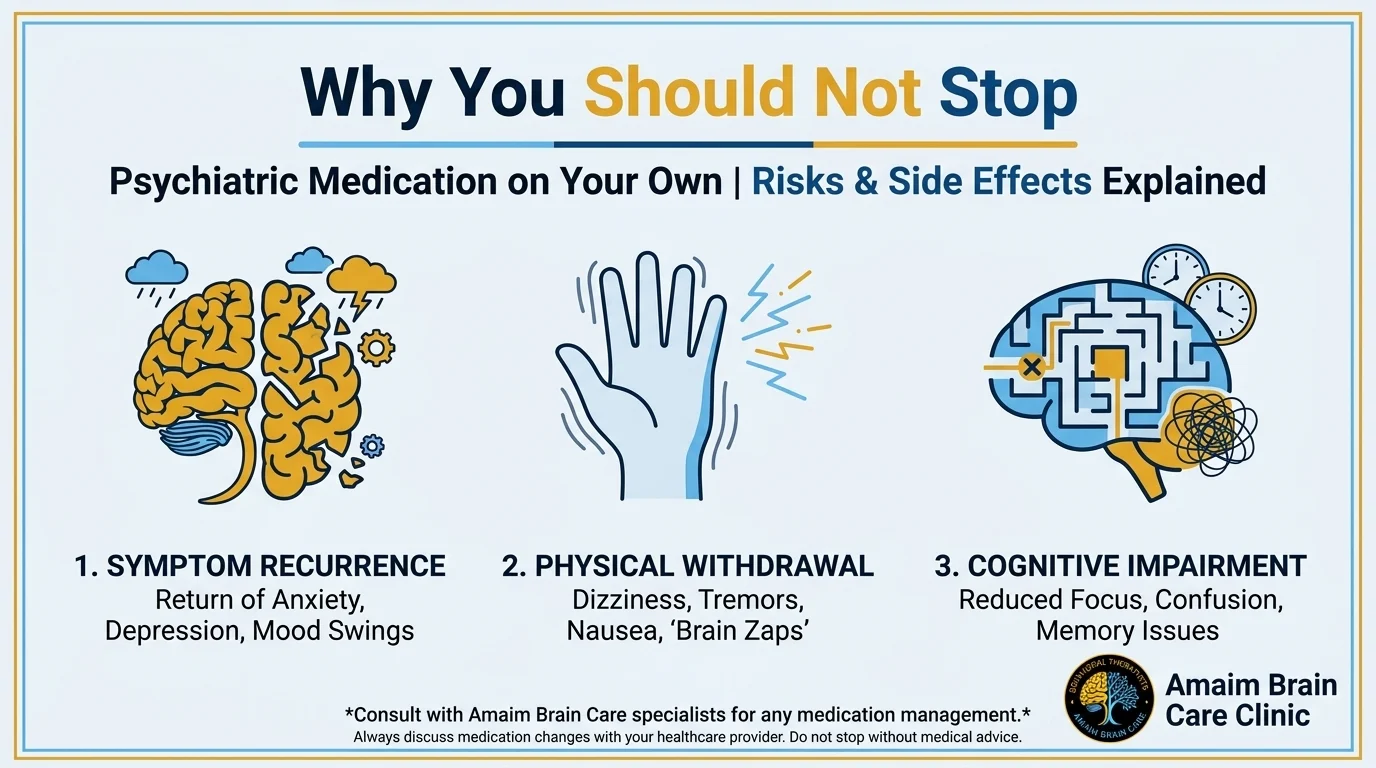
- Symptoms can return quickly (relapse)
- Anxiety, depression, or mood swings may become more intense
- Withdrawal symptoms like dizziness, irritability, or sleep problems
- Loss of treatment progress
In some cases, stopping suddenly can make the illness harder to treat later.
What Happens If You Change Dose Yourself?
Increasing or decreasing medicine on your own is also risky.
- Higher dose → more side effects (sedation, weight gain, low energy)
- Lower dose → reduced effectiveness and return of symptoms
- Unstable mood and inconsistent recovery
Medicines are carefully adjusted by doctors based on your condition, weight, response, and side effects. Self-adjustment disrupts this balance.
Understanding Half-Life of Medicines (Simple Explanation)
Every medicine has something called a half-life. This means how long the medicine stays active in your body.
For example:
- Short half-life medicines leave the body quickly (e.g., Paroxetine, Alprazolam)
- Long half-life medicines stay longer and leave slowly (e.g., Fluoxetine, Diazepam)
This matters because:
- Short half-life → sudden stopping can cause withdrawal symptoms quickly
- Long half-life → effects reduce slowly, but still need proper tapering
Medicines work by adjusting brain chemicals gradually. If you stop suddenly, your brain does not get time to adjust, which can cause discomfort or worsening symptoms.
| Medicine Name | Type | Half-Life | Duration in Body | Common Use | Risk if Stopped Suddenly |
|---|---|---|---|---|---|
| Paroxetine | SSRI | Short | ~24 hours | Depression, Anxiety | High withdrawal |
| Alprazolam | Benzodiazepine | Short | 6–12 hours | Anxiety, Panic | Rebound anxiety |
| Venlafaxine | SNRI | Short | ~12 hours | Depression, Anxiety | Severe withdrawal |
| Fluoxetine | SSRI | Long | 4–6 days | Depression, OCD | Lower withdrawal risk |
| Diazepam | Benzodiazepine | Long | 1–3 days | Anxiety | Delayed withdrawal |
| Olanzapine | Antipsychotic | Medium | ~30 hours | Psychosis, Bipolar | Relapse risk |
Common Side Effects When Misused
- Severe anxiety or panic
- Sleep disturbances
- Headache, dizziness
- Weight changes
- Emotional instability
These are not always because the medicine is bad — often it is because the medicine was not used properly.
The Right Way to Stop or Adjust Medicines
Medicines should always be reduced gradually under a psychiatrist’s guidance. This is called tapering.
- Dose is reduced step by step
- Your symptoms are monitored
- Side effects are managed safely
This process helps your brain adjust smoothly without causing withdrawal or relapse.
When You Should Talk to a Doctor
- If you feel better and want to stop medicine
- If you are experiencing side effects
- If medicine feels too strong or too weak
- If you are missing doses or feeling confused
Instead of stopping, always discuss. Small adjustments can make a big difference.
Get the Right Guidance
If you are dealing with anxiety or depression, proper treatment matters. You can learn more about treatment options here: Anxiety Treatment and Depression Treatment.
For complete psychiatric services, visit: Psychiatry Services.
If symptoms are severe and need structured care, you can also explore: Admission Facility.
You can consult directly with an experienced psychiatrist here: Dr Ahsan Tariq Dogar.
Remember, your treatment is a step-by-step process. Do not rush it or change it on your own.
Relief is possible. Take the first step today.
The information on this page is for educational purposes only. It is not a substitute for professional psychiatric advice. Do not start, stop, or change medication without consulting a qualified psychiatrist.
یہ معلومات صرف تعلیمی مقاصد کے لیے ہیں۔ کسی بھی دوا کو خود سے شروع، بند یا تبدیل نہ کریں۔ ہمیشہ ماہرِ نفسیات سے مشورہ کریں۔
Frequently Asked Questions About Psychiatric Medication
How can I get online consultation or visit the clinic in Pakistan?
You can visit the psychiatric clinic in Faisalabad or book an online consultation from anywhere in Pakistan via WhatsApp. To book, simply call or message on WhatsApp. Payments are accepted through bank transfer, cash, JazzCash, and EasyPaisa. Consultations are provided by Dr Ahsan Tariq Dogar.
Can I stop my psychiatric medicine when I feel better?
No, feeling better does not mean the condition is fully treated. Medicines should only be stopped gradually under medical supervision.
What happens if I miss a few doses?
Missing doses can reduce effectiveness and may cause symptoms to return. Try to take medicine regularly and consult your doctor if doses are missed frequently.
Are psychiatric medicines addictive?
Most commonly prescribed psychiatric medicines are not addictive. However, they must still be taken properly and under supervision.
How long do I need to take psychiatric medication?
It depends on your condition. Some people need short-term treatment, while others may require longer duration for stable recovery.
Can I adjust my dose based on how I feel?
No, dose changes should always be guided by a psychiatrist. Self-adjustment can lead to side effects or relapse.
What should I do if I experience side effects?
Inform your doctor instead of stopping medicine. Adjustments can be made safely to reduce side effects.