Psychiatry Services in Faisalabad, Pakistan

Comprehensive Mental Health Care for All

Psychiatry services are provided through structured clinical assessment, accurate diagnosis, and evidence-based treatment planning. Care is offered for mood, anxiety, psychotic, and behavioral conditions, with options for both in-clinic evaluation and secure online consultation. Each consultation focuses on safety, confidentiality, and long-term mental well-being, while respecting individual, family, and cultural factors.

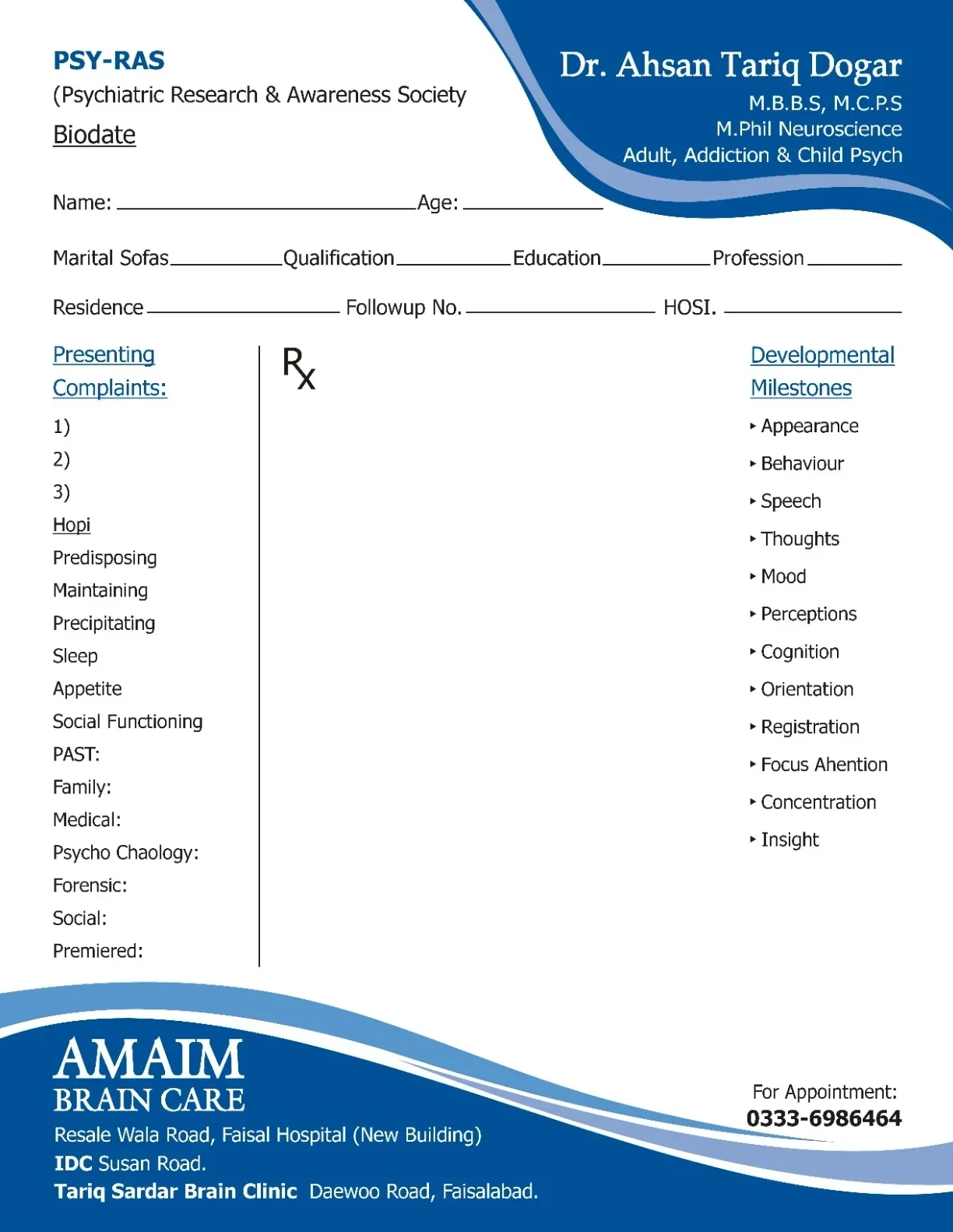
Professional admission and consultation office at Amaim Brain Care providing psychiatric and psychological services under Dr. Ahsan Tariq Dogar

Schizophrenia

Schizophrenia is a chronic psychiatric condition that affects perception, thinking, emotions, and behavior. It often requires long-term clinical care and structured follow-up.

Symptoms and presenting concerns:

  • Hallucinations, such as hearing voices
  • Delusional beliefs not based in reality
  • Disorganized thinking or speech
  • Social withdrawal and reduced emotional expression

Clinical evaluation and diagnosis:
Assessment involves detailed psychiatric history, symptom duration, functional impact, and exclusion of medical or substance-related causes. Family input is often helpful in understanding symptom progression.

Treatment and management:
Medication is usually essential for symptom control and relapse prevention. Psychotherapy, family education, and psychosocial support are important for improving insight, adherence, and daily functioning.

Risk level and care needs:
Moderate to high if untreated. Early diagnosis and consistent treatment significantly improve long-term outcomes and reduce relapse risk.

Who treats schizophrenia in Faisalabad?
Schizophrenia is treated by Dr. Ahsan Tariq Dogar at Amaim Brain Care, Faisalabad, with long-term care planning.
What symptoms indicate schizophrenia?
Hallucinations, delusions, disorganized thinking, social withdrawal, and reduced emotional expression are common.
How is schizophrenia diagnosed?
Diagnosis involves detailed history, symptom duration, functional impact, and exclusion of medical or substance causes.
Does schizophrenia require long-term treatment?
Yes. Medication, psychotherapy, and family support are essential for relapse prevention and functional stability.

Depression

Depression affects mood, energy, sleep, and thinking, often interfering with daily functioning and relationships.

Common symptoms patients report:

  • Persistent low mood or loss of interest
  • Fatigue, poor concentration, or slowed thinking
  • Changes in sleep or appetite
  • Feelings of worthlessness or excessive guilt

Evaluation and clinical focus:
Assessment includes duration of symptoms, impact on life, past episodes, and any suicidal thoughts. Medical causes such as thyroid or vitamin deficiencies may be considered.

Treatment approach:
Treatment may include psychotherapy, lifestyle adjustments, and medication when symptoms are moderate to severe. Mild cases may improve with non-medication approaches alone.

Risk level:
Low to moderate in many cases, but immediate attention is required if there are suicidal thoughts or severe functional decline.

Where can depression be treated in Faisalabad?
Depression is evaluated and treated by Dr. Ahsan Tariq Dogar at Amaim Brain Care, Faisalabad, using a structured clinical approach.
What symptoms commonly indicate depression?
Persistent low mood, loss of interest, fatigue, sleep or appetite changes, poor concentration, and feelings of guilt are common signs.
How is depression clinically assessed?
Assessment includes symptom duration, daily functioning, past episodes, stressors, and screening for medical causes.
Is medication always required for depression?
No. Mild cases may improve with therapy and lifestyle changes, while medication is considered for moderate to severe symptoms.

Anxiety Disorders

Anxiety disorders involve excessive fear or worry that is difficult to control and out of proportion to actual situations.

Presenting concerns:

  • Constant worry, restlessness, or feeling “on edge”
  • Palpitations, shortness of breath, sweating
  • Avoidance of certain places or situations
  • Sleep disturbance due to racing thoughts

Clinical interpretation:
Different types such as generalized anxiety, panic disorder, or phobias are identified based on symptom patterns and triggers.

Management options:
Cognitive behavioral therapy and relaxation strategies are first-line. Medication may be added if anxiety is persistent, severe, or disabling.

Care guidance:
Most anxiety disorders are low risk but benefit from early treatment to prevent chronic impairment.

Who treats anxiety disorders in Faisalabad?
Anxiety disorders are managed by Dr. Ahsan Tariq Dogar at Amaim Brain Care, Faisalabad.
What symptoms suggest an anxiety disorder?
Excessive worry, restlessness, palpitations, shortness of breath, sleep disturbance, or avoidance behaviors are common.
Are all anxiety disorders the same?
No. Conditions such as generalized anxiety, panic disorder, and phobias are identified based on symptom patterns.
What treatments are used for anxiety?
Therapy and relaxation strategies are first-line, with medication added if symptoms are persistent or disabling.

Bipolar Disorder

Bipolar disorder is characterized by episodes of depression and episodes of elevated or irritable mood.

Key features assessed:

  • Periods of high energy, reduced need for sleep
  • Impulsive or risky behavior
  • Alternating depressive episodes
  • Family history of mood disorders

Diagnostic considerations:
Accurate diagnosis is essential, as treatment differs from unipolar depression. History of mood shifts is carefully reviewed.

Treatment planning:
Medication is usually required for mood stabilization. Psychotherapy supports long-term stability and relapse prevention.

Risk considerations:
Moderate to high risk if untreated due to relapse, impulsivity, or suicidal behavior.

Where is bipolar disorder treated in Faisalabad?
Bipolar disorder is managed by Dr. Ahsan Tariq Dogar at Amaim Brain Care, Faisalabad.
What symptoms suggest bipolar disorder?
Alternating depressive episodes and periods of high energy, reduced sleep, impulsivity, or irritability are key features.
Why is accurate diagnosis important?
Treatment differs from depression, and incorrect diagnosis can worsen symptoms.
Does bipolar disorder require long-term treatment?
Yes. Medication is usually required for mood stabilization, with therapy supporting relapse prevention.

Mania

Mania involves an abnormally elevated or irritable mood with increased activity and impaired judgment.

Symptoms requiring attention:

  • Very little sleep with high energy
  • Rapid speech or racing thoughts
  • Overconfidence or grand ideas
  • Financial or social recklessness

Clinical significance:
Mania often indicates bipolar disorder and requires careful assessment to rule out substance or medical causes.

Treatment needs:
Medication is typically necessary. In severe cases, close supervision or short-term hospitalization may be required.

Urgency level:
High risk if behavior becomes unsafe or judgment is severely impaired.

Who evaluates manic episodes in Faisalabad?
Manic symptoms are assessed by Dr. Ahsan Tariq Dogar at Amaim Brain Care, Faisalabad.
What are warning signs of mania?
Very little sleep, excessive energy, rapid speech, grand ideas, and risky behavior are common signs.
Is mania always linked to bipolar disorder?
Most cases are, but medical or substance-related causes must also be ruled out.
Is mania a psychiatric emergency?
Yes, when judgment is impaired or behavior becomes unsafe, urgent treatment is required.

Psychosis

Psychosis involves a loss of contact with reality, affecting thoughts, perceptions, and behavior.

Warning signs:

  • Hallucinations (hearing or seeing things)
  • Fixed false beliefs (delusions)
  • Disorganized speech or behavior
  • Social withdrawal or neglect of self-care

Assessment focus:
Evaluation includes onset, substance use, medical conditions, and level of insight.

Treatment considerations:
Medication is usually required. Supportive care and family involvement are important for recovery.

Risk level:
Can be high, especially if there is agitation, poor insight, or risk of harm to self or others.

Where can psychosis be treated in Faisalabad?
Psychotic disorders are treated by Dr. Ahsan Tariq Dogar at Amaim Brain Care, Faisalabad.
What symptoms indicate psychosis?
Hallucinations, delusions, disorganized thinking, social withdrawal, and poor self-care are common signs.
How is psychosis evaluated?
Assessment includes symptom onset, substance use, medical causes, and level of insight.
Is psychosis high risk?
Risk can be high, especially if insight is poor or there is risk of harm to self or others.

Obsessive Compulsive Disorder (OCD)

OCD is characterized by unwanted intrusive thoughts and repetitive behaviors performed to reduce anxiety.

Typical concerns:

  • Recurrent distressing thoughts or images
  • Compulsive checking, cleaning, or counting
  • Time-consuming rituals affecting daily life

Clinical understanding:
Patients usually recognize that thoughts are excessive but feel unable to resist compulsions.

Treatment approach:
Behavioral therapy is central. Medication may be added if symptoms are severe or resistant.

Care outlook:
Generally low risk but may cause significant functional impairment if untreated.

Where is OCD treated in Faisalabad?
Obsessive compulsive disorder is evaluated and treated by Dr. Ahsan Tariq Dogar at Amaim Brain Care, Faisalabad.
What symptoms suggest OCD?
Recurrent unwanted thoughts, excessive checking, cleaning, counting, or repetitive rituals affecting daily life are common.
Do people with OCD realize their thoughts are excessive?
Most patients recognize the thoughts as unreasonable but feel unable to control the compulsive behaviors.
How is OCD treated?
Behavioral therapy is central, with medication added when symptoms are severe or persistent.

Drug Addiction

Addiction involves compulsive substance use despite harmful physical, psychological, or social consequences.

Signs prompting evaluation:

  • Loss of control over substance use
  • Withdrawal symptoms when stopping
  • Neglect of work, family, or health

Assessment process:
Type of substance, duration, quantity, and associated mental health conditions are carefully reviewed.

Treatment planning:
May include detoxification, counseling, relapse-prevention strategies, and medication when appropriate.

Risk level:
Moderate to high depending on substance, dose, and medical complications.

Where can addiction treatment be started in Faisalabad?
Substance use disorders are assessed and managed by Dr. Ahsan Tariq Dogar at Amaim Brain Care, Faisalabad.
What signs indicate drug addiction?
Loss of control over substance use, withdrawal symptoms, neglect of responsibilities, and continued use despite harm are key signs.
How is addiction evaluated?
Assessment includes type of substance, duration, quantity, withdrawal symptoms, and co-existing mental health issues.
Is addiction a high-risk condition?
Risk ranges from moderate to high depending on substance type, dose, and medical complications.

Personality Disorders

Personality disorders involve enduring patterns of thinking and behavior that affect relationships and functioning.

Presenting difficulties:

  • Chronic interpersonal conflicts
  • Emotional instability or impulsivity
  • Difficulty coping with stress

Clinical approach:
Diagnosis is based on long-term patterns rather than isolated symptoms.

Management strategy:
Psychotherapy is the mainstay. Medication may be used for specific symptoms like mood swings or anxiety.

Care outlook:
Usually low immediate risk but requires long-term structured support.

Who manages personality disorders in Faisalabad?
Personality disorders are assessed by Dr. Ahsan Tariq Dogar at Amaim Brain Care, Faisalabad.
What difficulties are seen in personality disorders?
Long-standing interpersonal conflicts, emotional instability, impulsivity, and poor stress tolerance are common.
How are personality disorders diagnosed?
Diagnosis is based on long-term behavior patterns rather than isolated symptoms.
What is the main treatment approach?
Psychotherapy is the primary treatment, with medication used only for specific symptoms.

Geriatric Psychiatry

Geriatric psychiatry addresses mental health conditions in older adults, considering medical and cognitive factors.

Common concerns:

  • Memory changes or confusion
  • Late-onset depression or anxiety
  • Behavioral changes in dementia

Assessment focus:
Evaluation includes cognition, medications, medical illnesses, and functional ability.

Treatment planning:
Non-medication strategies are preferred when possible. Medications are used cautiously with close monitoring.

Risk considerations:
Varies from low to moderate, with higher risk when cognition or safety is compromised.

Where can elderly mental health issues be treated in Faisalabad?
Geriatric psychiatric care is provided by Dr. Ahsan Tariq Dogar at Amaim Brain Care, Faisalabad.
What problems are addressed in geriatric psychiatry?
Memory changes, confusion, late-onset depression, anxiety, and behavioral issues in dementia are commonly evaluated.
How is treatment planned for older adults?
Non-medication strategies are preferred when possible, with careful medication use and close monitoring.
Are geriatric psychiatric conditions high risk?
Risk varies, increasing when cognition, mobility, or personal safety is affected.

Eating Disorders

Eating disorders involve disturbed eating behaviors and distorted body image affecting physical and mental health.

Common presentations:

  • Extreme food restriction or binge-purge cycles
  • Intense fear of weight gain
  • Significant weight changes

Clinical priorities:
Medical stability, nutritional status, and psychological factors are assessed together.

Treatment options:
Psychotherapy and nutritional rehabilitation are essential. Medication may support co-existing anxiety or depression.

Risk considerations:
Can be high risk due to medical complications if not addressed early.

Where are eating disorders treated in Faisalabad?
Eating disorders are managed by Dr. Ahsan Tariq Dogar at Amaim Brain Care, Faisalabad.
What symptoms suggest an eating disorder?
Severe food restriction, binge-purge behavior, fear of weight gain, and major weight changes are common signs.
How are eating disorders assessed?
Assessment focuses on medical stability, nutritional status, and psychological factors together.
Are eating disorders medically risky?
Yes. Risk can be high due to medical complications if treatment is delayed.

Request Your Appointment

Appointments are available for in-clinic and online consultations.
You may book your appointment by completing the booking form below, or by contacting our team via phone call, WhatsApp, or email.

FAQs

What conditions are treated under psychiatry services?
Psychiatry services address conditions such as depression, anxiety disorders, bipolar disorder, psychosis, obsessive compulsive disorder, addiction, and other mental health conditions.
When should I consult a psychiatrist?
A psychiatric consultation is advised when emotional or behavioral symptoms are persistent, worsening, or interfering with daily functioning, work, or relationships.
Is medication always required in psychiatric treatment?
Not always. Some conditions respond well to therapy and lifestyle changes, while others require medication based on severity, diagnosis, and clinical assessment.
Are online psychiatric consultations effective?
Online psychiatric consultations are effective for assessment, follow-ups, and treatment planning. In-person visits may be required for complex or high-risk cases.
How long does psychiatric treatment usually last?
Treatment duration varies depending on the condition, response to care, and individual needs. Some patients require short-term support, while others benefit from longer follow-up.
Is psychiatric care confidential?
Yes. Psychiatric care follows strict confidentiality standards, with information shared only when clinically or legally required.

Testimonials

!!! Emergency & Crisis Support !!!

When to Seek Emergency Help

  • Suicidal thoughts or self-harm behavior
  • Severe panic attacks or uncontrollable anxiety
  • Aggression, confusion, or loss of reality
  • Psychotic symptoms (hallucinations, delusions)
  • Sudden emotional or behavioral breakdown
  • Immediate risk to self or others

If any of the above are present, do not delay seeking urgent support.

What We Do in an Emergency

  • Provide immediate guidance for patients and caregivers
  • Offer urgent psychiatric and psychological support direction
  • Help stabilize crisis situations until in-person care is available
  • Guide families on next steps and safe intervention
  • Coordinate referrals for emergency or hospital care when needed
  • Compassionate, non-judgmental assistance

Our priority is safety, rapid response, and compassionate support.

If this is a life-threatening emergency, please contact local emergency services or go to the nearest emergency department immediately.​

Request an Appointment

Book an in-clinic or online consultation and we will get back to you soon.

Hi Doctor, I’d like to get some information.
Contact on WhatsApp