Many people in Pakistan experience extreme stress from work, studies, financial pressure, or family responsibilities. Over time, this stress can lead to emotional exhaustion. Some people call this burnout, while others may actually be experiencing depression. Because the symptoms can look similar, many individuals struggle to understand the difference.
Understanding how burnout differs from depression is important because both conditions require different types of support and treatment. Recognizing the warning signs early can help individuals protect their mental health and seek the right guidance.
If symptoms continue for several weeks or begin affecting daily life, learning more about depression and its treatment options can help individuals understand when professional psychiatric evaluation may be necessary.
What is Burnout?
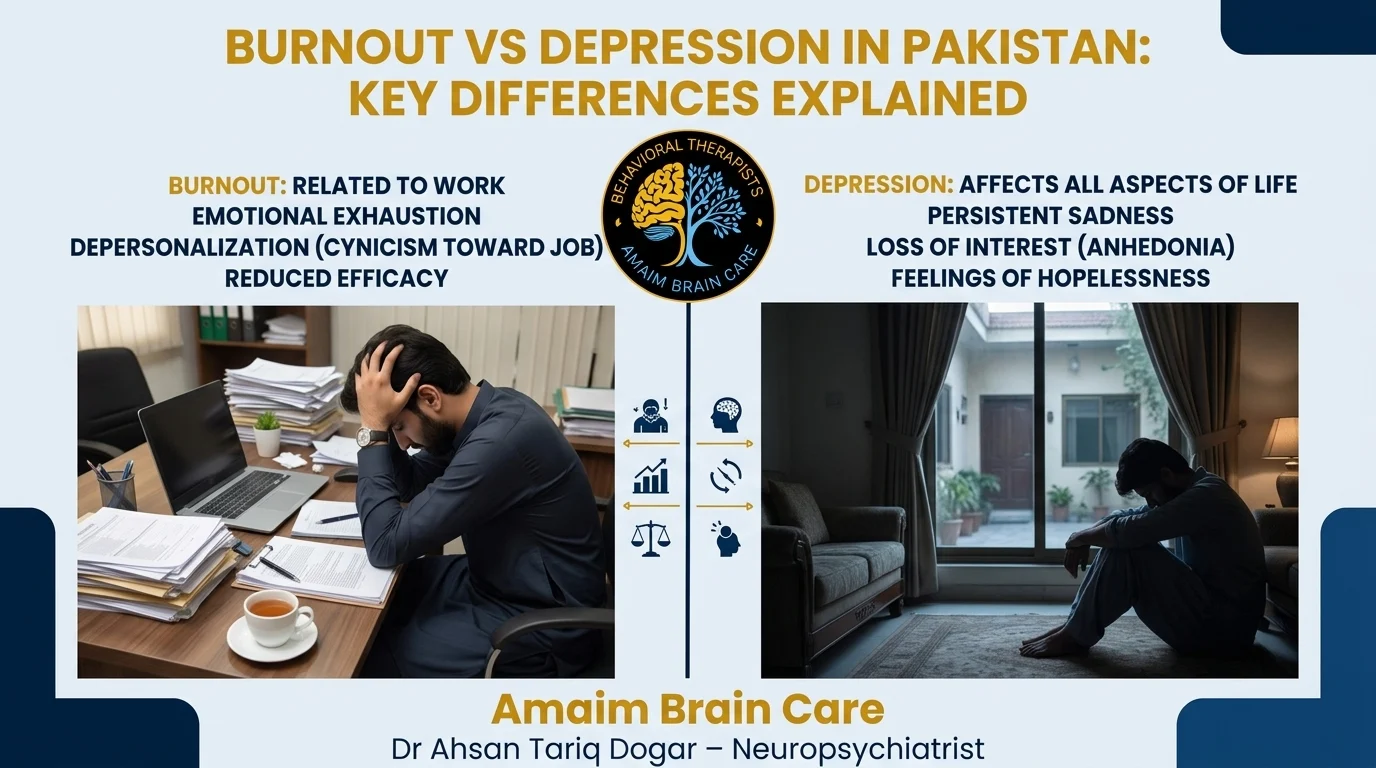
Burnout is a state of emotional, mental, and physical exhaustion caused by prolonged stress. It is most commonly linked to work, academic pressure, or overwhelming responsibilities.
In Pakistan, burnout is increasingly common among professionals, business owners, healthcare workers, and university students who face intense pressure to perform and succeed.
Burnout often develops gradually and may include symptoms such as:
- Extreme fatigue or emotional exhaustion
- Loss of motivation for work or studies
- Feeling overwhelmed by responsibilities
- Reduced productivity or concentration
- Frustration or irritability
The important feature of burnout is that symptoms are usually linked to a specific environment such as work or academic stress.
What is Depression?
Depression is a medical mental health condition that affects mood, thinking, energy, sleep, and daily functioning. Unlike burnout, depression affects many areas of life, not just work or school.
People with depression may experience:
- Persistent sadness or emotional emptiness
- Loss of interest in activities they previously enjoyed
- Sleep problems or fatigue
- Difficulty concentrating
- Feelings of hopelessness or worthlessness
Depression can continue even when the stressful situation changes or improves.
Key Differences Between Burnout and Depression
Although burnout and depression share some symptoms, there are important differences.
- Burnout is usually related to work or academic stress.
- Depression affects multiple areas of life including relationships, energy, and emotional health.
- Burnout symptoms often improve with rest or time away from the stressful environment.
- Depression symptoms usually persist even after rest.
Because these conditions can overlap, professional mental health evaluation may sometimes be necessary to determine the underlying cause of symptoms.
Why Burnout is Increasing in Pakistan
Many social and economic pressures in Pakistan contribute to emotional exhaustion and burnout. These may include financial responsibilities, academic competition, long working hours, and expectations from family or society.
Young professionals and students often experience pressure to achieve career success while balancing personal responsibilities.
When stress continues without adequate rest or emotional support, burnout may develop.
When Burnout Can Turn Into Depression
Long-term burnout can sometimes lead to depression if emotional exhaustion continues for a long time.
For example, individuals who remain under severe stress without support may begin to feel hopeless, lose motivation for daily life, and withdraw from social relationships.
If symptoms persist for several weeks and affect sleep, mood, and energy levels, professional mental health evaluation may be helpful.
When to Seek Professional Mental Health Support
If emotional exhaustion, persistent sadness, or loss of motivation continues for several weeks, consulting a mental health professional can help determine whether the symptoms are related to burnout, depression, or another condition.
Individuals in Faisalabad can consult Dr. Ahsan Tariq Dogar, a consultant neuropsychiatrist experienced in diagnosing mood disorders.
Patients may visit Amaim Brain Care or explore available psychiatric consultation services to better understand their symptoms.
If you want quick guidance about consultation options, the clinic team can also be contacted through WhatsApp.
Severe Mental Health Symptoms
If someone experiences suicidal thoughts, severe emotional distress, or inability to function in daily life, immediate professional help is necessary.
Some cases may require stabilization through specialized care available in a psychiatric admission facility.